I am a theoretical physicist at Berkeley National Lab. My current research sits at the intersection of condensed matter and materials physics and AI.
Bio
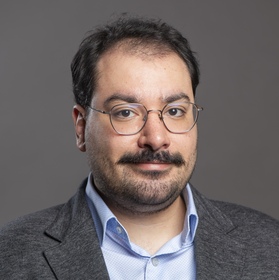
Omar A. Ashour
Postdoctoral Researcher
Lawrence Berkeley National Lab
GitHub
Email (alt email)
Google Scholar
I completed my PhD in physics at UC Berkeley in 2025, where I explored new approaches for dark matter detection from the perspective of a condensed matter physicist. Before that, I studied classical integrable systems during my MS in applied physics from UC Berkeley and BS in electrical engineering from Texas A&M.
My previous research has spanned condensed matter physics, dark matter phenomenology, nonlinear optics and dynamics, computational materials science, and quantum algorithms. See my Google Scholar for more details.
Current Research Interests
In no particular order, here are some questions I am currently working on:
How can we use toy models to design real quantum materials? And can AI help us bridge the theory-computation-experiment gap?
- I am interested in the question broadly, but especially for unconventional magnets and superconductors.
- One angle I’ve been exploring is how to best utilize quantum computers, which necessarily rely on toy models.
- What we grow in the lab is never what we simulate. What kinds of data do we need and what models do we train to help us bridge this gap?
Can we build generative models for disordered materials (e.g., amorphous) that are physically interpretable?
- I am particularly interested in developing models rooted in statistical mechanics, via thermodynamic geometry.
- But I also do more “practical” work, including on topologically-informed generative models using persistent homology.
How do we design and train physical neural networks, i.e., ones where the neurons and weights are encoded in some physical system?
- My work here fits within the frameworks of thermodynamic computing and stochastic reservoir computing.
- I am interested in both hardware realizations (e.g., CMOS) and fundamental theory (particularly information geometry).
- I draw a lot of inspiration from materials physics and stat mech here, including, e.g., spin glass theory.
Recent posts
Coming soon!